Hedge Trimming in Clapham

Hedge trimming in Clapham is a straightforward way to keep garden boundaries neat, healthy and practical. Our main service focuses on shaping hedges, managing height and width, and taking away the cuttings so the finish is tidy. We work with formal and informal growth, from crisp front-garden lines to broader boundary planting that needs regular reduction rather than heavy reshaping.
We also support related garden care where it helps the hedge look balanced rather than overworked. That can include careful attention around fences, paths and access points, as well as sensible timing for maintenance when growth is dense or uneven. For customers comparing options, our services overview gives a clear view of the wider garden work we cover alongside hedge trimming.
Trimming is usually about more than simply cutting back what is visible. Good work keeps the hedge dense lower down, avoids overexposing bare stems and leaves enough natural shape to suit the planting. In practice that means making considered cuts, checking the line from both sides where possible and deciding whether a hedge needs light tidy-up work or a fuller reduction. If you are ready to discuss the job, you can start with a plain enquiry and request a quotation.
What our hedge trimming service covers
Hedge trimming can involve different methods depending on species, size and the condition of the growth. A compact ornamental hedge often needs regular, precise clipping to maintain a sharp outline, while an established boundary hedge may need a more measured approach to avoid removing too much at once. We work to keep the shape consistent and to leave the hedge suitable for ongoing maintenance.
Where a hedge is part of a wider garden layout, the finish needs to work with the rest of the space rather than dominate it. We can trim along frontages, rear boundaries and internal divisions, taking account of the line of the garden, access and any features nearby. If you want to see how this sits alongside broader outdoor work, our garden maintenance page explains related upkeep that can be combined with trimming.
Some hedges are clipped for appearance, others for privacy or to keep growth clear of paths, gates and seating areas. The method changes accordingly. A tidy, squared shape may suit a boundary hedge, while softer contours can be more appropriate for mixed planting. The aim is to make the hedge look intentional, with a finish that fits the plant and the setting rather than forcing every hedge into the same profile.
Shaping, reduction and seasonal control
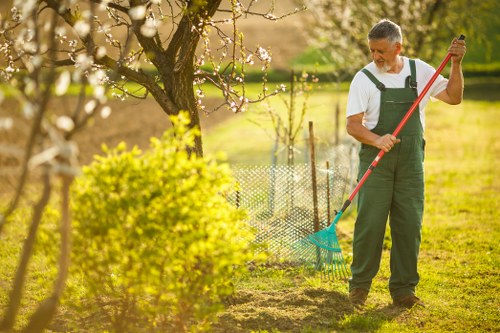
Not every hedge needs the same type of intervention, so our hedge trimming in Clapham is adapted to the task in hand. Light shaping keeps recent growth even and preserves a neat outline. Reduction work is more involved and may be needed when a hedge has outgrown its space or started to encroach on boundaries, windows or access routes. The right cut helps restore control without leaving the plant stripped or uneven.
Seasonal growth also affects the approach. Fast-growing hedges can soon lose their line, while slower varieties benefit from steadier maintenance. We take care to avoid hacking at growth that should be preserved for future density. When a hedge is particularly wide or tall, it is often better to manage the profile in stages rather than remove too much in one visit. That makes the result look better and helps the hedge recover more naturally.
For customers who want to plan work around larger outdoor improvements, our landscaping page shows how hedge trimming can sit alongside broader changes to the garden layout. If the hedge is part of a wider refresh, it can be sensible to think about access, borders and the final line together so the finished space feels coherent rather than piecemeal.
Working neatly around boundaries, paths and access
Hedges often sit in places where clean edges matter just as much as the cut itself. Paths, driveways, shared boundaries and planting beds can all be affected by overgrowth, so trimming needs to be carried out with care. We pay attention to the working line, the spread of loose clippings and the final edge so that the hedge looks finished without leaving debris in the surrounding area.
For the customer, the main decision is usually whether the hedge needs a simple tidy-up or a more detailed re-forming. A tidy-up suits hedges that already hold their shape and only need the new growth brought back into line. Re-forming is appropriate where the hedge has broadened, lost definition or developed uneven height. Where needed, we can work from the hedge trimming service page to keep the scope clearly focused on the specific hedge rather than treating every garden as the same type of job.
Useful preparation is limited and practical. It helps to make sure the hedge can be reached, to move fragile items away from the cutting line and to note any sections that should be left alone because of nesting, recent planting or poor access. If there are gates or side passages involved, it is useful to mention them when making contact so the work can be approached in a sensible order. Clear access and a clear brief usually make the trimming more straightforward.
Hedge trimming for privacy, light and street-facing gardens
In many gardens, a hedge does several jobs at once. It can screen a property, soften hard edges and help define the space without relying on fences or walls alone. Trimming needs to protect those benefits while keeping the hedge manageable. If the hedge is too thick or too high, the result can block light or become hard to maintain. If it is cut too hard, privacy can be lost and the plant may look sparse.
That balance is one reason a measured approach matters. We keep an eye on how much material is being removed and on the visual effect from both sides where relevant. Street-facing hedges often need a cleaner line because they are seen daily from the pavement or road, while rear boundary hedges may need a more functional finish that supports regular maintenance. For broader garden preparation, our garden clearance page can be useful when trimming is part of a larger tidy-up rather than a standalone hedge job.
If the hedge is very mature, the best result may come from a steady reduction over time instead of a drastic cut. That gives the plant a chance to remain dense and avoid an abrupt change in appearance. It also makes future maintenance more predictable, because the hedge is brought back into a shape that can be kept with less effort. In this way, the trimming supports both appearance and practical use of the garden.
H3: Choosing the right trim for the hedge
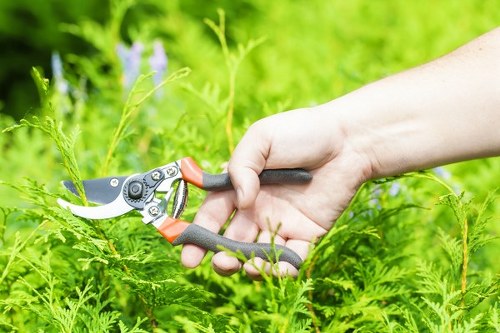
Different hedges respond differently to cutting, so the method should match the growth rather than follow a one-size-fits-all routine. Soft, leafy hedges generally benefit from regular trimming to encourage density. Woody, overgrown hedges may need a slower, more cautious approach. The decision is not only about appearance; it is also about whether the hedge can recover neatly and remain useful over time.
Common choices include a light finish for seasonal upkeep, a fuller reduction where a hedge has become too large, and selective attention to awkward sections that lean, bulge or interfere with nearby features. In some gardens, the upper line needs more attention than the sides; in others, the whole hedge needs rebalancing. If the job is linked to lawn or border work, our lawn mowing page can help customers see how hedge trimming fits into an overall maintenance plan.
- Light trimming for recent growth and a consistent outline
- Shaping for hedges that need a clearer profile
- Reduction for hedges that have outgrown their intended space
- Detail work around openings, corners and boundary changes
Clippings, finish and practical garden care
The visible cut is only part of the job. A proper finish also includes gathering the clippings and leaving the area usable once the hedge has been trimmed. That matters when the hedge runs close to seating, paving or planted borders, because a neat edge can be spoiled quickly if cut material is left behind. We aim to leave the work area orderly and the hedge in a condition that fits the rest of the garden.
Customers sometimes want to combine hedge work with other plant care so the garden is handled in a sensible sequence. That can be especially helpful where hedges sit alongside mixed beds, lawn edges or climbing plants that need a little room after trimming. For a fuller view of ongoing outdoor upkeep, our landscape gardening page explains related work that can complement hedge maintenance without turning the task into something unnecessarily broad.
If the hedge has been left for a while, the first cut may reveal where the structure is healthy and where it has thinned out. That is one reason careful trimming matters: it allows the plant to keep a natural framework instead of being cut so hard that the result looks harsh. A good finish should look deliberate, tidy and suitable for repeat maintenance, not just short-term improvement.
About Clapham
Clapham is a district in south London associated with a mix of residential streets, open green spaces and a long-running local high street. Clapham Common is one of its most recognisable features: a large open space that gives the area a strong green character and acts as a focal point for leisure, walking and community life. The Common’s broad landscape contrasts with the denser surrounding streets, creating a varied townscape rather than a uniform one. Alongside it, the neighbourhood includes terraces, mansion blocks and later residential development that reflect different phases of London expansion. Clapham Old Town preserves a more historic centre, with a compact village-like feel in parts of the district and a pattern of older buildings around the common and nearby routes. Transport has also shaped the area over time, helping it remain closely connected to the rest of the city while keeping a distinct local identity. The area’s high streets, small parks and conservation influences contribute to a lived-in urban environment that blends everyday convenience with recognisable landmarks. Clapham has long been known for its social and cultural activity, and the local streets still carry that mixture of neighbourhood identity, open space and city living that makes the district immediately recognisable within London.
H3: Larger hedges, smaller details
Some jobs are more detailed than others. A tall hedge may need attention at the top line to bring it back within reach, while a lower hedge may need precision along the front to keep a clean face. Corners, returns and changes in level can all affect the finish, and the best result often comes from working steadily rather than rushing to the final shape. The hedge should look even from the main viewpoint, but it also needs to remain practical for the next round of maintenance.
Where there are different species in the same garden, they may need different treatment. One hedge may tolerate a sharper outline, while another is better left with a softer line. That is one reason it is helpful to describe the hedge rather than simply asking for “the hedge to be cut”. If you are also considering outdoor improvements beyond trimming, our decking services page is available for customers whose gardens include hard landscaping that needs to sit neatly alongside planted areas.
For a straightforward quotation request, it helps to mention the general size, whether the hedge is front, side or rear facing, and whether there are any awkward sections to reach. You do not need a long explanation, just enough detail to describe the work sensibly. A clear request lets us focus on the right scope and prepare a quotation that reflects the hedge in front of us rather than a generic assumption.
Making a quotation request

A quotation for hedge trimming is usually best arranged around the actual hedge, its condition and the amount of work needed. Hedges that are already in line can be handled differently from hedges that have become tall, wide or uneven. The more specific the description, the easier it is to understand whether the job is a light tidy, a shaping task or a more involved reduction. That keeps expectations realistic and the proposal better matched to the work.
If you are considering hedge trimming in Clapham, you can use our pricing and quotes page as the starting point for a quotation request. When you get in touch, it helps to state the hedge length, approximate height, and whether there is easy access from one side or both sides. If the hedge is mixed with other garden work, mention that too so the scope can be reviewed properly. Please ask for a quotation when you are ready.
We also keep the overall process practical and direct. A brief description of the hedge, plus any access notes or timing preferences, is usually enough to begin. If the work is straightforward, that may be all that is needed; if the hedge is complex, a few more details can help avoid unnecessary back-and-forth. For general company information, our about page is available, and if you are ready to make contact, request a quotation today.